Burial ground on Visingsö
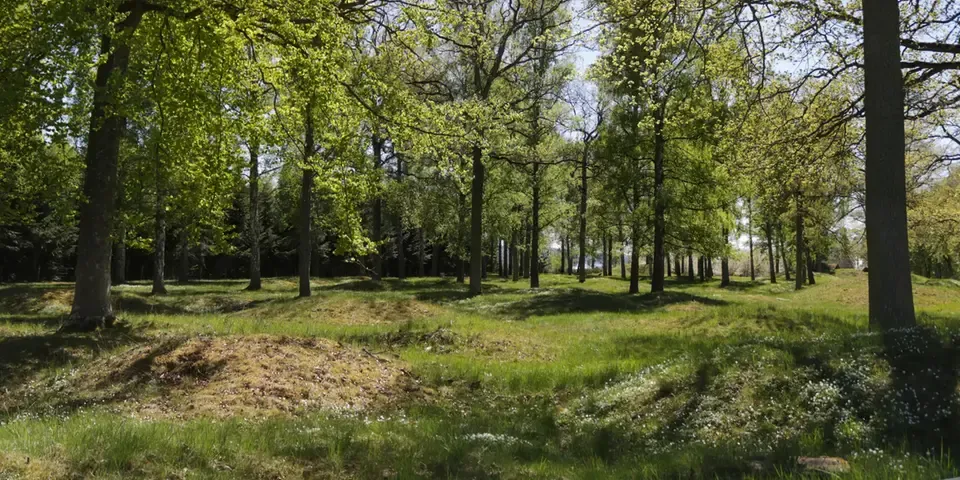
Visingsö is home to a large number of prehistoric graves, indicating that the island has been inhabited and considered a place of significance for a very long time.
Visingsö is home to a large number of prehistoric graves, indicating that the island has been inhabited and considered a place of significance for a very long time. The graves are mainly concentrated in three major burial grounds – the northern, central and southern – which follow a ridge running across the island. There are several different types of graves here, including burial mounds, stone settings, stone circles and ship settings. Together, they reflect how burial customs have changed over time.
The northern burial ground is the smallest and contains graves from the Vendel Period, circa 550–800 AD. The central burial ground was in use for roughly 1,500 years, from the Pre-Roman Iron Age (circa 500 BC) to the Viking Age (circa 1050 AD). This indicates a long continuity of settlement on Visingsö. The southern burial ground is dominated by burial mounds from the Early Iron Age, but finds indicate that the site was already even as far back as the Bronze Age
Together, these burial grounds offer a unique insight into how people on Visingsö lived and how they buried their dead, as well as how society changed from the Bronze Age to the Viking Age. These are places where thousands of years of history are still visible in the landscape.
Administrator: County Administrative Board
Senast granskad/publicerad:
