Hagahögen
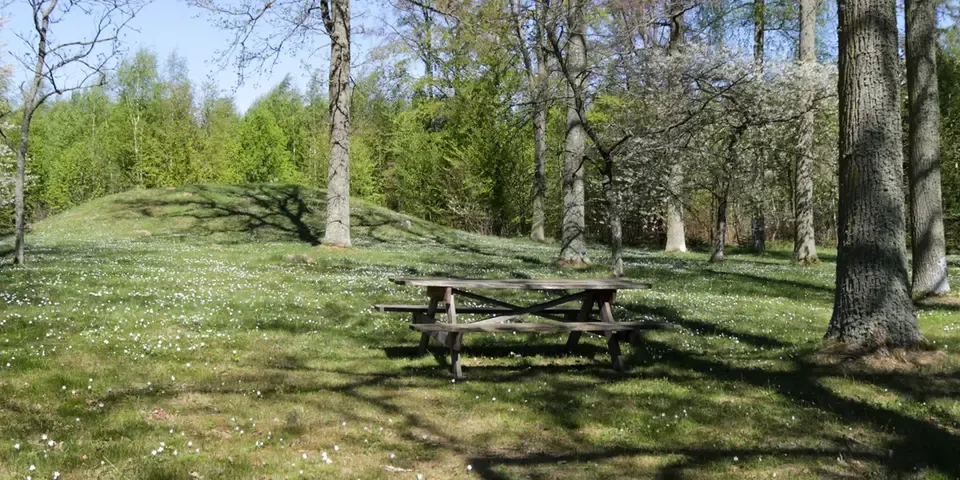
Hagahögen is a large burial mound on Visingsö that is still clearly visible in the landscape. The mound is evidence that people of high status were buried here.
Historically, it was believed to be the grave of a single chieftain, but archaeological finds have since shown that the mound is the site of several burials, not just one.
The graves date from the Bronze Age and consist of both cremation and urn burials, as well as an older burial in the form of a stone coffin. Jewellery, amongst other items, has been found in the graves, and both the design and materials demonstrate excellent craftsmanship. The graves are therefore interpreted as belonging to high-ranking individuals in society.
In the vicinity of Hagahögen, there are traces suggesting that buildings may have stood nearby. On Visingsö, several bronze objects have also been found – axes, jewellery and a miniature sword – which may have been grave goods that were later lost as the land was cultivated and used for agriculture.
Not far from here are also several mounds of broken pottery, sometimes referred to as Bronze Age ‘rubbish dumps’. These consist of chipped cooking stones mixed with food scraps and broken pottery vessels. One such mound has been excavated, and several hearths were found nearby, which may indicate that a building or settlement once stood in the area.
Hagahögen thus provides a rich picture of Bronze Age society on Visingsö – with traces of burial rituals, everyday life and social structures.
Administrator: National Property Board of Sweden
Senast granskad/publicerad:
